


Heart disease does not always begin with severe chest pain or a sudden medical emergency. Some people may have subtle symptoms such as unusual tiredness, breathlessness during routine activities, palpitations or reduced exercise tolerance. Others may have no noticeable symptoms until a serious complication occurs.
Knowing the early warning signs of heart disease can help you recognize changes that deserve medical attention. However, these symptoms are not specific to heart disease, and having one symptom does not automatically mean you have a heart condition.
Below are 10 warning signs to understand, followed by the symptoms that require urgent medical attention.
Heart disease is a broad term that includes conditions such as coronary artery disease, heart rhythm disorders, heart valve disease, cardiomyopathy and heart failure. Because these conditions affect the heart in different ways, symptoms can vary considerably. Some people may have no symptoms for a long time.
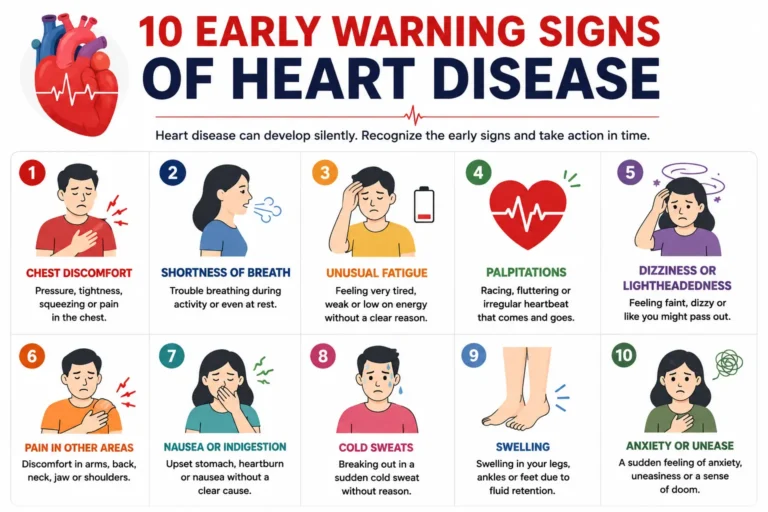
Chest discomfort is one of the most important heart-related symptoms to recognize. It may feel like pressure, tightness, squeezing, fullness, burning or discomfort in the center of the chest. With coronary artery disease, chest discomfort may occur when the heart needs more oxygen, such as during physical activity or emotional stress.
Pain or discomfort may also spread to the arm, shoulder, back, neck, jaw or upper abdomen. Not every episode of chest pain is caused by the heart, but unexplained or recurring chest discomfort should not be ignored.
Breathlessness can occur with several heart conditions.You may notice that activities that were previously easy such as walking, climbing stairs or exercising now leave you unusually breathless.
Shortness of breath may occur with or without chest discomfort. It can also occur at rest or when lying down in some heart conditions.
Because breathing problems have many possible causes, persistent or unexplained breathlessness should be medically evaluated.
Feeling tired after a demanding day is normal. However, new, persistent or unexplained fatigue, particularly when it interferes with routine activities, deserves attention.
Some people with heart conditions experience fatigue because the heart cannot supply enough blood and oxygen to meet the body’s demands.
Unusual tiredness can have many other causes, so it should not automatically be considered a sign of heart disease.
Palpitations may feel like:
These sensations can occur for harmless reasons, including stress, caffeine or exercise, but they can also occur with arrhythmias. Heart rhythm disorders may also cause dizziness, fainting, shortness of breath or chest discomfort.
If palpitations are new, persistent or accompanied by chest pain, severe breathlessness or fainting, seek urgent medical attention.
Occasional lightheadedness can have many causes, including dehydration or standing up quickly. However, dizziness or fainting accompanied by chest discomfort, breathlessness or an abnormal heartbeat may require urgent assessment.
Some arrhythmias and other heart conditions can cause dizziness or fainting.
Heart-related discomfort does not always stay in the chest. During a heart attack, discomfort may occur in one or both arms, the back, neck, jaw or stomach.
This is particularly important when the discomfort occurs together with chest pressure, shortness of breath, sweating, nausea or lightheadedness.
Nausea, vomiting, heartburn or indigestion can have many non-cardiac causes.
However, these symptoms can also occur during a heart attack, particularly when combined with other warning signs. Women may be more likely than men to experience symptoms such as nausea, unusual fatigue, shortness of breath or discomfort in the back, neck, jaw or shoulder during a heart attack.
Do not assume that unexplained upper-body or stomach discomfort is simply indigestion if other concerning symptoms are present.
Sudden cold sweating, especially when it occurs together with chest discomfort, shortness of breath, nausea or lightheadedness, can be a warning sign of a heart attack.
Sweating by itself is not enough to diagnose a heart condition, but sudden unexplained sweating with other symptoms should be taken seriously.
A persistent cough can have many causes.
However, coughing or breathlessness can occur in some people with heart failure, particularly when fluid builds up in or around the lungs. Other associated symptoms may include breathlessness at night and swelling in the legs or ankles.
If a cough is persistent or accompanied by breathlessness, swelling or reduced exercise tolerance, speak with a healthcare professional.
Swelling in the lower legs, ankles or feet can occur when fluid accumulates in the body. Heart failure is one possible cause, although swelling can also result from kidney disease, medications, venous problems and other conditions.
New or unexplained swelling, particularly when accompanied by breathlessness or fatigue, should be medically evaluated.
Know how to keep your heart healthy
Heart disease can affect women and men differently, and symptoms should not be dismissed simply because they do not match the “classic” picture of a heart attack.
Chest pain or discomfort remains a common heart attack symptom in women. However, women may also experience shortness of breath, nausea or vomiting, unusual fatigue, dizziness, sweating, or pain in the neck, jaw, shoulder, back or upper abdomen.
This is one reason it is important to consider the overall combination of symptoms, rather than waiting for severe chest pain.
These terms are related but are not interchangeable. Heart disease refers to a broad group of conditions affecting the heart, including coronary artery disease, arrhythmias, valve disease, cardiomyopathy and heart failure.
A heart attack occurs when blood flow to part of the heart muscle becomes blocked or severely reduced.
Heart attacks can cause chest pressure or discomfort, pain in the upper body, shortness of breath, nausea, sweating, fatigue or lightheadedness. Symptoms can be mild, severe, sudden or develop gradually.
Do not wait for symptoms to become severe. Seek emergency medical help if you have symptoms that could indicate a heart attack, particularly:
The American Heart Association recommends calling emergency services when heart attack warning signs occur rather than delaying care. If you think you may be having a heart attack, seek emergency medical care immediately.
Risk increases with factors such as:
Regular health checks can help identify important cardiovascular risk factors before complications occur.
The American Heart Association emphasizes managing cardiovascular risk factors and learning the warning signs of heart attack and stroke.
Consider discussing your symptoms with a doctor or cardiologist if you experience:
A healthcare professional may assess your symptoms, medical history and risk factors and decide whether investigations such as an ECG, blood tests, echocardiogram, stress testing or other examinations are appropriate.
There is no single test that diagnoses every type of heart disease.
Depending on your symptoms and medical history, a healthcare professional may recommend tests such as:
The appropriate test depends on the suspected condition and individual risk profile.
Many cardiovascular risk factors can be managed through healthy habits and appropriate medical care.
Helpful steps include:
The American Heart Association recommends regular physical activity and management of cardiovascular risk factors as part of heart-health prevention.
You must contact the cardiology Hospitals in Mumbai to avail treatment from Smt. S.R. Mehta & Sir K.P., a cardiac Institute where you can get the best treatment with the usage of modern technology.
S.R. Mehta & Sir K.P. Cardiac Institute, Mumbai’s premier facility noted for excellence in heart health services, provides the greatest cardiac hospital experience.
WhatsApp us