



High blood pressure is often associated with older adults, but young adults can develop hypertension too. If your blood pressure is repeatedly high in your 20s, 30s or early 40s, it is important to understand why rather than assuming that age protects you from hypertension.
So, what causes high blood pressure in young adults?
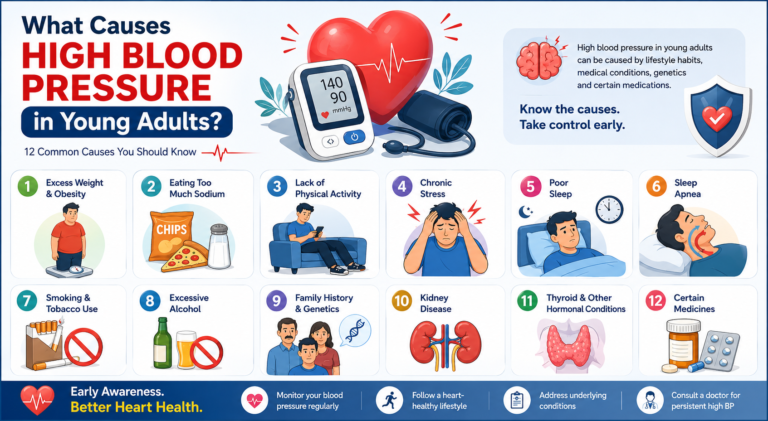
Common contributors include excess weight, a high-sodium diet, lack of physical activity, chronic stress, poor sleep, tobacco use, alcohol consumption and family history. In some young adults, high blood pressure may also be linked to conditions such as kidney disease, sleep apnea, thyroid problems, hormonal disorders or certain medications.
The good news is that many risk factors can be addressed. However, persistent high blood pressure should not be ignored simply because you are young. High blood pressure is an important modifiable risk factor for cardiovascular and kidney disease, making early identification and appropriate management important.
Blood pressure measures the force of blood against the walls of your arteries as your heart pumps blood around the body.
It is recorded using two numbers:
The 2025 American Heart Association/American College of Cardiology guideline classifies adult blood pressure as follows:
| Category | Systolic | Diastolic |
| Normal | Less than 120 mm Hg | Less than 80 mm Hg |
| Elevated | 120–129 mm Hg | Less than 80 mm Hg |
| Stage 1 hypertension | 130–139 mm Hg | 80–89 mm Hg |
| Stage 2 hypertension | 140 mm Hg or higher | 90 mm Hg or higher |
A diagnosis should not generally be made from one isolated reading. Blood pressure should be measured accurately and interpreted in the context of repeated readings and the person’s overall health. The 2026 guideline also highlights home blood pressure monitoring as an important tool in managing hypertension.
High blood pressure can result from several factors. Sometimes there is no single obvious cause, while in other cases an underlying health condition may contribute.
Being overweight or having obesity can increase the risk of high blood pressure.
Excess body weight can affect the cardiovascular system and may occur alongside other risk factors such as physical inactivity, unhealthy eating patterns and sleep problems.
For young adults who have gained significant weight over time, checking blood pressure regularly can be an important part of preventive health care.
A diet high in sodium can contribute to elevated blood pressure, particularly in people who are sensitive to salt.
Common sources of sodium include:
NHLBI identifies a diet high in salt and low in potassium as a lifestyle factor associated with increased risk of high blood pressure.
A sedentary lifestyle can increase the risk of high blood pressure.
Young adults may spend much of their day sitting at work, studying, commuting or using computers and mobile devices. Regular physical activity can support cardiovascular fitness and help with weight management and blood pressure control.
The 2025 AHA/ACC guideline recommends regular physical activity as part of preventing and managing elevated blood pressure
Can stress cause high blood pressure?
Stress can cause temporary increases in blood pressure. Long-term stressful situations may also make blood pressure management more difficult, particularly when stress contributes to poor sleep, unhealthy eating, inactivity, tobacco use or increased alcohol consumption.
However, it is important not to assume that stress is the only reason for persistent high BP.
If your blood pressure remains elevated, it should be properly evaluated.
Sleep is an important part of cardiovascular health.
Not getting enough good-quality sleep may increase the risk of high blood pressure. Irregular work schedules, long working hours, excessive screen time and other lifestyle factors can interfere with healthy sleep patterns.
If you consistently wake feeling tired despite getting enough time in bed, or if someone notices loud snoring or pauses in your breathing during sleep, discuss these symptoms with a healthcare professional.
Sleep apnea is a condition in which breathing repeatedly stops or becomes restricted during sleep.
Possible symptoms include:
Sleep apnea is one of the medical conditions associated with high blood pressure.
Tobacco use can damage blood vessels and increase cardiovascular risk. Nicotine can also cause short-term increases in blood pressure.
For a young adult with elevated BP, stopping smoking or tobacco use is an important step toward protecting long-term heart health.
Regularly consuming too much alcohol can contribute to high blood pressure.
Reducing or avoiding alcohol may therefore be recommended as part of an individual’s blood pressure management plan. The 2025 AHA/ACC guideline includes reducing or eliminating alcohol among recommended lifestyle measures.
Some people are genetically more likely to develop high blood pressure.
Having parents or close relatives with hypertension does not mean that you will definitely develop it. However, family history can be an important reason to monitor your blood pressure and pay attention to modifiable risk factors.
The kidneys play an important role in regulating fluid and sodium balance and therefore influence blood pressure.
Kidney disease can contribute to high blood pressure, while uncontrolled hypertension can also damage the kidneys over time.
When hypertension occurs at a young age, is difficult to control or occurs alongside other clinical findings, a healthcare professional may consider whether kidney disease or another underlying condition could be contributing.
Hormones help regulate many functions in the body, including processes that influence blood pressure.
Certain thyroid and other hormonal disorders can contribute to hypertension. NHLBI lists thyroid problems and several other medical conditions among possible contributors to high blood pressure.
Some medicines can increase blood pressure or make it harder to control.
Depending on the medication, examples can include certain:
NHLBI notes that some medicines can affect the body’s ability to control blood pressure.
If you think a medicine may be affecting your blood pressure, speak with your healthcare professional. Do not stop prescribed medication on your own.
Being young does not guarantee normal blood pressure. If you have repeatedly high readings, possible contributing factors include:
Several factors can also occur together.
For example, a young adult with a family history of hypertension may also have poor sleep, a sedentary lifestyle and a high-sodium diet. Addressing modifiable factors may help improve overall cardiovascular health.
Persistent high blood pressure at 25, 30 or 35 should not be ignored simply because you are young.
High blood pressure can place ongoing stress on blood vessels and organs. Over time, uncontrolled hypertension is associated with cardiovascular conditions such as coronary artery disease, heart failure and stroke, as well as chronic kidney disease.
This does not mean that every young adult with one elevated BP reading has hypertension or will develop heart disease.
Instead, it means that repeated high readings deserve appropriate attention and evaluation.
In some people, blood pressure can improve significantly through lifestyle changes or by treating an underlying condition.
Helpful lifestyle measures include:
The 2025 AHA/ACC guideline recommends lifestyle intervention for adults with elevated blood pressure and hypertension. Depending on blood pressure levels and overall cardiovascular risk, medication may also be recommended.
Whether medication is needed depends on the individual’s BP readings, cardiovascular risk, other health conditions and response to lifestyle measures.
You should consider medical evaluation if:
A healthcare professional can determine whether you need further testing, lifestyle support, monitoring or treatment.
The evaluation depends on your blood pressure readings, medical history, symptoms, family history and other risk factors.
Depending on the clinical situation, your doctor may recommend:
Not every person with high blood pressure needs every test.
If hypertension occurs unusually early or is difficult to control, your healthcare professional may consider whether there is an underlying cause that needs further evaluation.
Follow a Heart-Healthy Diet
Include more vegetables, fruits, whole grains, legumes and other minimally processed foods.
Reduce foods that are particularly high in sodium, saturated fat and added sugars.
Stay Physically Active
Regular physical activity can support cardiovascular fitness, healthy weight and blood pressure management.
Maintain a Healthy Weight
If you are overweight, gradual and sustainable weight management may help improve blood pressure and overall cardiovascular health.
Improve Your Sleep
Aim for consistent, good-quality sleep. If you have symptoms of sleep apnea, seek medical advice.
Manage Stress
Regular physical activity, relaxation techniques, adequate sleep and healthy social connections can help with stress management.
Avoid Tobacco
If you smoke or use tobacco, quitting can significantly benefit cardiovascular health.
Monitor Your Blood Pressure
Home BP monitoring can provide useful information when performed correctly.
The 2025 AHA/ACC guideline supports home blood pressure monitoring as an important component of hypertension management. It also cautions against relying on cuffless devices such as smartwatches for accurate BP measurement until their precision and reliability are sufficiently established.
If you are a young adult with persistent high blood pressure, especially when the cause is unclear or you have additional cardiovascular risk factors, professional evaluation can help determine the appropriate next step.
A cardiologist can assess your cardiovascular health, review your blood pressure history and determine whether additional cardiac evaluation is appropriate.
For patients seeking cardiac care in Mumbai, Smt S R Mehta & Sir K P Cardiac Institute provides specialised cardiac care and evaluation.
High blood pressure is not only a concern for older adults. Young adults can also develop hypertension, and the reasons may range from lifestyle factors and family history to kidney disease, sleep apnea, thyroid problems and certain medicines.
The most important step is not to dismiss repeated high BP readings because of your age.
Regular monitoring, healthy lifestyle habits and appropriate medical evaluation can help identify contributing factors and reduce the potential long-term impact of high blood pressure.
If you have repeatedly elevated blood pressure or concerns about your cardiovascular health, consult a qualified healthcare professional.
Smt S R Mehta & Sir K P Cardiac Institute is committed to providing specialised cardiac evaluation and care for patients in Mumbai.
Author & Medical Review
Written by: Smt S R Mehta & Sir K P Cardiac Institute
Medically Reviewed by: Smt S R Mehta & Sir K P Cardiac Institute
S.R. Mehta & Sir K.P. Cardiac Institute, Mumbai’s premier facility noted for excellence in heart health services, provides the greatest cardiac hospital experience.
WhatsApp us