


Orthopedic problems affect the bones, joints, muscles, ligaments, and tendons, making everyday activities such as walking, climbing stairs, or lifting objects painful and difficult. They can affect people of all ages, whether due to injuries, aging, poor posture, or repetitive strain. Recognizing the symptoms early and seeking timely treatment can help prevent complications and keep you active. In this guide, we’ll explore the most common orthopedic problems, their causes, symptoms, diagnosis, treatment options, and practical tips to maintain healthy bones and joints.
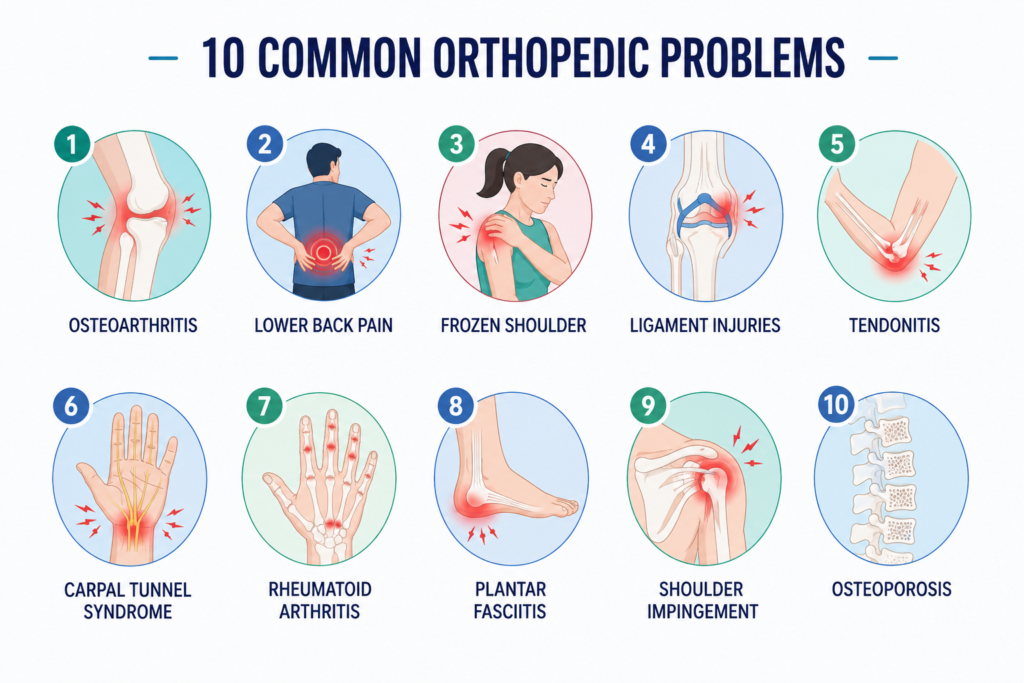
The most common orthopedic problems include osteoarthritis, lower back pain, frozen shoulder, ligament injuries, tendonitis, carpal tunnel syndrome, rheumatoid arthritis, plantar fasciitis, shoulder impingement, and osteoporosis. These conditions affect the bones, joints, muscles, tendons, and ligaments, leading to pain, stiffness, swelling, and reduced mobility.
Orthopedic problems can affect anyone, from young athletes and working professionals to older adults. They may develop gradually due to aging, poor posture, repetitive movements, or medical conditions, or occur suddenly after an injury or accident.
If left untreated, these conditions can interfere with daily activities, reduce mobility, and impact overall quality of life. Early diagnosis and appropriate treatment play an important role in relieving pain, restoring movement, and preventing long term complications.
✔ What It Is: Osteoarthritis is a degenerative joint disease in which the protective cartilage between bones gradually wears away, causing pain, stiffness, and reduced joint movement. It most commonly affects the knees, hips, hands, and spine.
✔ Common Symptoms: Joint pain, stiffness, swelling, reduced flexibility, grinding sensation, and difficulty performing daily activities.
✔ Common Causes: Aging, obesity, previous joint injuries, repetitive stress on joints, and family history.
✔ Prevention Tips: Maintain a healthy weight, exercise regularly, strengthen supporting muscles, and avoid excessive stress on your joints.
✔ What It Is: Lower back pain is one of the most common orthopedic conditions affecting the muscles, ligaments, discs, or spine. It can range from mild discomfort to severe pain that limits movement.
✔ Common Symptoms: Persistent back pain, stiffness, muscle spasms, pain while bending, and pain radiating to the legs.
✔ Common Causes: Poor posture, prolonged sitting, weak core muscles, heavy lifting, muscle strain, and spinal disorders.
✔ Prevention Tips: Practice good posture, strengthen your core, avoid prolonged sitting, and lift heavy objects using proper technique.
✔ What It Is: Frozen shoulder is a condition that causes pain, stiffness, and restricted movement in the shoulder joint. It develops gradually and can make everyday activities difficult.
✔ Common Symptoms: Shoulder pain, limited range of motion, stiffness, difficulty lifting the arm, and discomfort during sleep.
✔ Common Causes: Shoulder injury, prolonged arm immobility, diabetes, thyroid disorders, and previous shoulder surgery.
✔ Prevention Tips: Perform regular shoulder stretching exercises, stay physically active, and seek early treatment for shoulder pain.
✔ What It Is: Ligament injuries occur when the strong tissues connecting bones are stretched or torn, usually during sports, sudden twists, or falls. Knee ligaments are the most commonly affected.
✔ Common Symptoms: Sudden pain, swelling, joint instability, popping sensation, bruising, and difficulty walking.
✔ Common Causes: Sports injuries, accidents, sudden twisting movements, falls, and improper landing techniques.
✔ Prevention Tips: Warm up before exercise, strengthen leg muscles, wear proper sports footwear, and use correct training techniques.
✔ What It Is: Tendonitis is the inflammation of a tendon caused by repetitive movements or overuse. It commonly affects the shoulders, elbows, wrists, knees, and ankles.
✔ Common Symptoms: Pain during movement, tenderness, swelling, stiffness, weakness, and reduced joint function.
✔ Common Causes: Repetitive activities, sports injuries, overuse, poor posture, and aging.
✔ Prevention Tips: Stretch before exercise, avoid repetitive strain, take regular breaks, and maintain proper posture during activities.
✔ What It Is: Carpal tunnel syndrome develops when the median nerve is compressed inside the wrist, causing pain, numbness, and weakness in the hand and fingers.
✔ Common Symptoms: Tingling in the fingers, wrist pain, numbness, weak grip strength, and hand weakness.
✔ Common Causes: Repetitive hand movements, prolonged computer use, diabetes, wrist injuries, and arthritis.
✔ Prevention Tips: Use ergonomic keyboards, maintain proper wrist posture, perform wrist stretches, and take frequent breaks while working.
✔ What It Is: Rheumatoid arthritis is an autoimmune disorder in which the immune system attacks healthy joints, leading to inflammation, pain, and long term joint damage if left untreated.
✔ Common Symptoms: Swollen joints, joint pain, morning stiffness, fatigue, warmth around joints, and reduced mobility.
✔ Common Causes: Autoimmune response, genetic factors, hormonal changes, smoking, and environmental triggers.
✔ Prevention Tips: Avoid smoking, stay physically active, eat a balanced diet, and seek early medical evaluation if symptoms develop.
✔ What It Is: Plantar fasciitis is one of the most common causes of heel pain and occurs when the thick band of tissue supporting the arch of the foot becomes inflamed.
✔ Common Symptoms: Heel pain, pain during the first steps in the morning, foot stiffness, tenderness, and discomfort after prolonged standing.
✔ Common Causes: Standing for long hours, obesity, improper footwear, excessive running, and flat feet.
✔ Prevention Tips: Wear supportive shoes, stretch your calf muscles, maintain a healthy weight, and avoid walking barefoot on hard surfaces.
✔ What It Is: Shoulder impingement occurs when the tendons of the rotator cuff become compressed during shoulder movement, causing pain and limiting arm mobility.
✔ Common Symptoms: Shoulder pain while lifting the arm, weakness, stiffness, reduced movement, and pain during sleep.
✔ Common Causes: Repetitive overhead activities, poor posture, muscle imbalance, shoulder injuries, and aging.
✔ Prevention Tips: Improve posture, strengthen shoulder muscles, stretch regularly, and avoid repetitive overhead movements.
✔ What It Is: Osteoporosis is a condition that weakens bones by reducing bone density, making them fragile and more likely to fracture even after minor falls or injuries.
✔ Common Symptoms: Frequent fractures, back pain, loss of height, stooped posture, and weak bones.
✔ Common Causes: Aging, calcium deficiency, vitamin D deficiency, hormonal changes, smoking, and lack of physical activity.
✔ Prevention Tips: Eat calcium rich foods, get enough vitamin D, perform weight bearing exercises, avoid smoking, and have regular bone density screenings.
Many orthopedic problems can be effectively managed without surgery, especially when diagnosed early. The appropriate treatment depends on the type and severity of the condition, as well as the patient’s overall health and activity level.
Non surgical treatments are often successful in relieving pain, improving mobility, and helping patients return to their normal daily activities.
Common non surgical treatment options include:
However, if conservative treatment does not provide sufficient relief or the joint has sustained significant damage, surgical treatment may be recommended to restore function and improve quality of life.
Accurate diagnosis is the foundation of effective orthopedic treatment. An orthopedic specialist begins by understanding your symptoms, medical history, lifestyle, and any previous injuries before recommending appropriate diagnostic tests.
Depending on your condition, your doctor may recommend one or more of the following investigations:
The doctor evaluates joint movement, muscle strength, flexibility, swelling, tenderness, and stability to identify the affected area.
X rays help detect fractures, arthritis, joint deformities, bone infections, and changes in bone structure.
Magnetic Resonance Imaging provides detailed images of soft tissues, including ligaments, tendons, muscles, cartilage, and spinal discs. It is especially useful for sports injuries and joint disorders.
Computed Tomography creates detailed cross sectional images of bones and joints, helping diagnose complex fractures and certain spinal conditions.
Ultrasound is useful for evaluating muscles, tendons, ligaments, and fluid around joints. It also assists in guiding certain orthopedic procedures.
Blood investigations help identify infections, inflammation, autoimmune disorders such as rheumatoid arthritis, and metabolic bone diseases.
A DEXA scan measures bone mineral density and is the most effective test for diagnosing osteoporosis and assessing fracture risk.
These diagnostic tools enable orthopedic specialists to develop a personalized treatment plan based on the patient’s specific condition.
Treatment depends on the type and severity of the orthopedic condition. Many problems can be managed with non surgical treatments, while severe cases may require advanced procedures. Early diagnosis and timely care help relieve pain, restore mobility, and improve recovery.
Early diagnosis and a personalized treatment plan can help relieve symptoms, improve mobility, and prevent long term complications.
Do not ignore persistent pain or reduced mobility, as early diagnosis can prevent complications and improve recovery. Consider consulting an orthopedic specialist if you experience:
If you’re experiencing any of these symptoms, the experienced orthopedic specialists at Smt. S.R. Mehta & Sir K.P. Cardiac Institute can provide comprehensive evaluation, advanced diagnostic imaging, and personalized treatment plans to help you regain mobility and improve your quality of life.
Orthopedic problems can significantly impact your quality of life, but with the right knowledge and preventive care, you can stay active and healthy. If you’re experiencing any symptoms or searching for a reliable Orthopedic hospital near me, trust the expert team at Smt S R Mehta & Sir K P Cardiac Institute for accurate diagnosis and world-class treatment.
Book an appointment with Mumbai’s leading orthopedic specialists today!
Visit 👉 Smt S R Mehta & Sir K P Cardiac Institute
Website: https://srmkpcardiac.com/
Your mobility, health, and recovery start here.
Smt S R Mehta & Sir K P Cardiac Institute
Disclaimer: Consult a qualified orthopedic specialist for an accurate diagnosis and personalized care.
S.R. Mehta & Sir K.P. Cardiac Institute, Mumbai’s premier facility noted for excellence in heart health services, provides the greatest cardiac hospital experience.
WhatsApp us