


A balanced diet provides the body with a variety of nutrients it needs to function properly, including carbohydrates, protein, healthy fats, vitamins, minerals, fiber and water. But eating a balanced diet is not simply about counting nutrients or following a strict meal plan.
A healthy eating pattern is about choosing a variety of nutritious foods, maintaining appropriate portions and limiting foods that are high in excess sodium, added sugars, unhealthy fats and calories.
So, what is a balanced diet and how can it support heart health?
A balanced diet can contribute to healthy weight management and help support cardiovascular health when combined with regular physical activity, adequate sleep, avoidance of tobacco and appropriate management of factors such as blood pressure, cholesterol and blood glucose. The American Heart Association‘s 2026 dietary guidance emphasizes an overall heart-healthy eating pattern rather than focusing on individual “superfoods” or single nutrients.
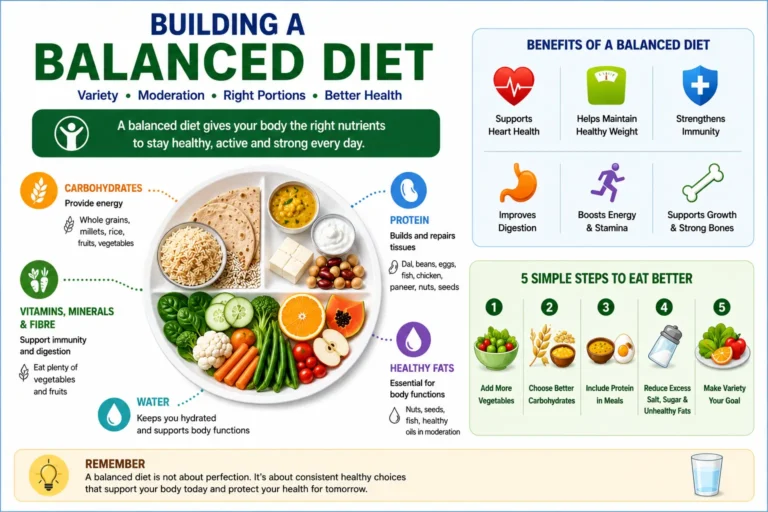
A balanced diet is an eating pattern that provides a variety of essential nutrients from different foods while supplying an appropriate amount of energy for your body’s needs.
It generally includes:
The exact amount of each food depends on factors such as age, body size, activity level, health conditions and individual nutritional requirements. There is therefore no single meal plan that is considered a balanced diet for everyone.
A balanced diet is important because the body needs different nutrients for different functions.
Carbohydrates provide energy, protein supports growth and tissue repair, fats help with essential body functions, vitamins and minerals support numerous biological processes, fibre supports digestive health, and water is necessary for hydration and many physiological functions.
A healthy dietary pattern can also help reduce the risk of several diet-related health problems. WHO notes that healthy diets help protect against malnutrition and noncommunicable diseases including cardiovascular disease, diabetes, stroke and cancer.
However, diet is only one part of maintaining health. Physical activity, sleep, avoiding tobacco, appropriate medical care and other lifestyle factors also matter.
Your body needs different nutrients to support energy production, growth, tissue repair, immunity and normal body functions.
Carbohydrates are an important source of energy. Healthier choices can include:
The quality of carbohydrates matters. Whole grains, pulses, vegetables and fruits generally provide more fibre and nutrients than highly refined carbohydrate foods.
WHO recommends that carbohydrates should primarily come from whole grains, vegetables, fruits and pulses.
Practical tip: Instead of eliminating rice or roti, consider the overall meal. Pair a grain with vegetables and a protein source such as dal, beans, curd, eggs or fish.
Protein helps maintain and repair tissues and supports many functions in the body. Sources include:
Fat is also an essential nutrient, but the type of fat matters. Sources of unsaturated fats include:
The American Heart Association’s latest dietary guidance recommends choosing unsaturated fats in place of saturated fats as part of a heart-healthy dietary pattern.
Vitamins and minerals are micronutrients required for many functions throughout the body . Vegetables, fruits, whole grains, legumes, dairy or alternatives, nuts, seeds and other nutritious foods provide a variety of vitamins and minerals. Different nutrients support different processes, including:
A varied diet is one of the best ways to obtain a broad range of micronutrients. Include different types and colours of vegetables and fruits rather than eating the same few foods every day.
Fibre is found in foods such as:
A diet rich in fibre-containing foods can be part of a heart-healthy eating pattern. WHO recommends that adults and children over 10 aim for at least 25 grams of naturally occurring dietary fibre per day, while also recommending at least 400 grams of fruits and vegetables daily for people over 10.
Water is essential for normal body functions.Your fluid requirements can vary depending on factors such as activity, weather, age and medical conditions.
People with certain heart or kidney conditions may receive specific fluid recommendations from their healthcare professional.
Eating a varied and nutritious diet can support health in several ways.
A diverse diet makes it easier to obtain the range of nutrients required by the body.
Balanced meals can help provide adequate nutrition without relying heavily on foods high in calories but low in nutritional value.
However, weight management depends on total energy intake, physical activity, genetics, sleep and other factors.
A diet rich in vegetables, fruits, whole grains, pulses, nuts and other nutritious foods and lower in excess sodium, free sugars and unhealthy fats can support cardiovascular health.
This is particularly important because high sodium intake can contribute to increased blood pressure, while unhealthy dietary patterns are associated with cardiovascular risk.
Fibre-rich foods such as vegetables, fruits, whole grains and pulses can contribute to healthy digestion.
Children and adolescents have changing nutritional requirements as they grow. Adequate nutrition is particularly important during these stages.
Eating a variety of foods makes it easier to obtain essential vitamins and minerals.
A combination of carbohydrates, protein and fats can help provide energy and nutritional support throughout the day.
A balanced diet does not require expensive or exotic foods. Many nutritious foods commonly eaten in Indian households can form part of a healthy eating pattern.
Food group | Examples |
Whole grains & cereals | Whole wheat, oats, brown rice, millets, jowar, bajra, ragi |
Pulses & legumes | Dal, rajma, chana, beans, peas |
Vegetables | Spinach, bhindi, carrots, cauliflower, beans, gourds |
Fruits | Apple, orange, guava, papaya, banana, berries, seasonal fruits |
Protein foods | Dal, beans, eggs, fish, chicken, paneer, tofu |
Dairy/alternatives | Curd, yoghurt, milk or suitable alternatives |
Nuts & seeds | Almonds, walnuts, peanuts, flaxseed, chia seeds |
Healthy fats | Nuts, seeds and suitable vegetable oils |
Fluids | Mainly water and other appropriate unsweetened fluids |
One practical way to think about a balanced meal is to include different food groups rather than making one food the centre of every meal. For example, a meal could contain:
Vegetables and other plant foods: A substantial portion of the meal Whole grains or other high-fibre carbohydrate sources: An appropriate portion based on individual energy needs Protein-rich foods: An appropriate serving of dal, beans, fish, eggs, poultry, dairy or another protein source
You can also include a small amount of healthy fat and water or another suitable unsweetened beverage. There is no single plate size or exact percentage that is appropriate for everyone. Calorie and nutrient requirements vary from person to person.
Yes. A balanced, heart-healthy eating pattern can support cardiovascular health. The American Heart Association’s 2026 dietary guidance emphasizes:
The guidance also emphasizes that healthy eating patterns should be followed throughout life rather than being treated as a short-term diet.
A heart-healthy diet can also complement other preventive measures such as regular physical activity, maintaining a healthy weight and controlling cardiovascular risk factors.
Diet is one factor that can influence blood pressure. A heart-healthy eating pattern that limits excess sodium and emphasizes vegetables, fruits, whole grains, legumes and other nutritious foods can support blood pressure management.
The DASH eating plan is one evidence-based dietary approach that can help lower blood pressure and LDL cholesterol. NHLBI describes DASH as a flexible, balanced eating plan that can be adapted according to individual calorie needs.
However, diet is not a substitute for prescribed treatment. If you have persistent high blood pressure, speak with your healthcare professional.
A healthy eating pattern can support healthier cholesterol levels, particularly when it emphasizes foods such as vegetables, fruits, whole grains, legumes, nuts and other sources of fibre while reducing foods high in saturated fat.
NHLBI’s Therapeutic Lifestyle Changes approach, for example, emphasizes reducing saturated fat and increasing soluble fibre as part of cholesterol management.
If you have high cholesterol, your healthcare professional can determine whether dietary changes alone are appropriate or whether medication and additional treatment are also needed.
A healthy dietary pattern is one component of cardiovascular disease prevention. A balanced diet may help support healthy weight, blood pressure, cholesterol and blood glucose, all of which can influence cardiovascular risk.
However, diet is only one part of prevention.
Other important factors include:
The American Heart Association recommends focusing on overall cardiovascular health across the life course rather than relying on individual foods or isolated dietary changes.
A balanced diet does not mean that you can never eat your favourite foods.Instead, pay attention to how frequently and how much you consume. Foods and beverages to limit can include:
The 2026 AHA dietary guidance specifically recommends minimizing added sugars, reducing sodium, choosing minimally processed foods and replacing sources of saturated fat with healthier unsaturated fats.
No. Nutritional needs vary from person to person. A healthy eating pattern may need to be adjusted based on:
For example, someone with kidney disease may need different recommendations from someone without kidney problems. Similarly, people with heart failure may receive individualized advice about sodium and fluid intake.
If you have a medical condition, avoid making major dietary changes based only on general information from the internet. Discuss your requirements with an appropriate healthcare professional.
If you have high blood pressure, your overall dietary pattern matters. A nutritionist may recommend emphasizing:
You may also be advised to reduce highly processed and salty foods.The appropriate diet depends on your individual health, medications and other medical conditions.
People with high cholesterol may benefit from a dietary pattern that emphasizes:
It may also be helpful to reduce foods high in saturated fat.
However, cholesterol management should be individualized. Some people may require medication in addition to dietary and lifestyle changes.
A balanced diet can support healthy weight management when combined with appropriate physical activity and overall energy balance. Rather than relying on crash diets, focus on sustainable habits:
Your calorie requirements depend on factors such as age, sex, body size, activity level and health status.
Even people who are trying to eat healthily can make common mistakes.
Eating Too Much of One “Healthy” Food
A food can be nutritious but still contribute excess calories when eaten in very large amounts.
Avoiding Entire Food Groups Without Medical Reason
Eliminating carbohydrates, fats or another food group is not automatically necessary for a balanced diet.
Relying Too Much on Packaged “Healthy” Foods
Labels such as “natural,” “low-fat” or “healthy” do not necessarily mean a product is appropriate in large quantities.
Check ingredients and nutrition information when possible.
Ignoring Sodium
A meal can appear healthy while still containing substantial sodium from sauces, packaged ingredients or processed foods.
Assuming Supplements Replace Food
Most people should aim to obtain nutrients primarily from a varied eating pattern. Supplements may be appropriate for some individuals, but they should not automatically replace nutritious foods.
You do not need to change your entire diet in one day. Start with practical changes.
Try adding a vegetable to meals where you currently have none.
Replace some refined grains with whole-grain or higher-fibre alternatives when appropriate.
Add dal, beans, eggs, fish, poultry, dairy, nuts, seeds or another suitable protein source.
Gradually reduce your dependence on packaged snacks, processed meats and highly processed meals.
Use herbs, spices and other flavouring options instead of relying heavily on salt.
Reduce sugary drinks and choose water or other suitable unsweetened beverages more frequently.
A healthy eating pattern is more useful when it can be maintained over the long term.
General nutrition advice is useful for prevention, but some situations require personalized medical guidance. Consider speaking with a healthcare professional if you have:
A cardiologist can assess cardiovascular risk and determine whether additional evaluation is appropriate.
For patients seeking cardiac care in Mumbai, Smt S R Mehta & Sir K P Cardiac Institute provides specialized cardiac evaluation and care.
A balanced diet is not about following a perfect meal plan or avoiding every food you enjoy. It is about creating an overall eating pattern that provides a variety of nutrients while supporting your body’s energy needs and long-term health.
For better cardiovascular health, focus on vegetables, fruits, whole grains, legumes, healthy protein sources, nuts and seeds, while reducing excess sodium, added sugars, saturated fats and highly processed foods.
Remember that diet is only one part of heart health. Regular physical activity, healthy weight management, adequate sleep, avoiding tobacco, managing stress and keeping blood pressure, cholesterol and blood glucose under control are also important.
If you have cardiovascular risk factors or concerns about your heart health, speak with a qualified healthcare professional. Smt S R Mehta & Sir K P Cardiac Institute is committed to providing specialized cardiac evaluation and care for patients in Mumbai.
Written by: Smt S R Mehta & Sir K P Cardiac Institute
Medically Reviewed by:Smt S R Mehta & Sir K P Cardiac Institute
Medical Review: This article has been reviewed for medical accuracy by a qualified cardiac specialist. It is intended for general education and does not replace an individual medical consultation or diagnosis.
S.R. Mehta & Sir K.P. Cardiac Institute, Mumbai’s premier facility noted for excellence in heart health services, provides the greatest cardiac hospital experience.
WhatsApp us